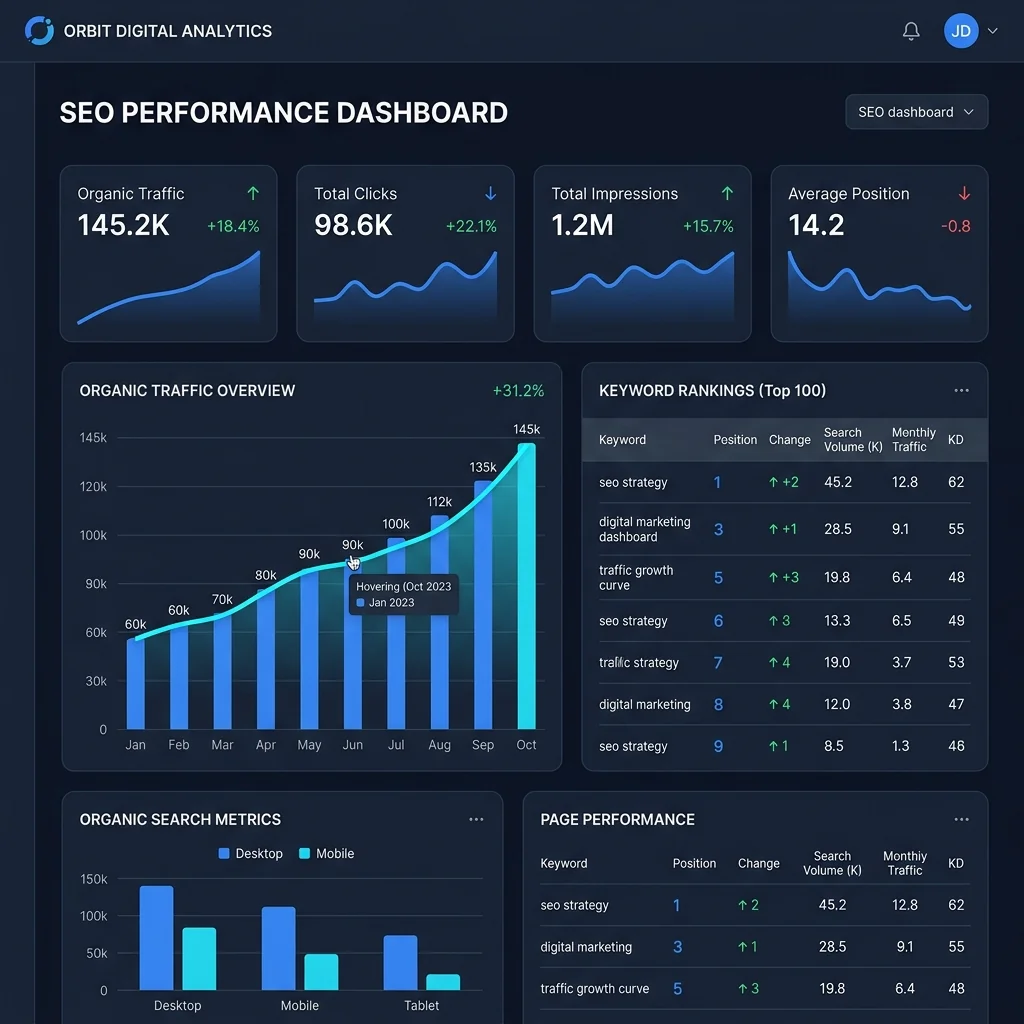
Key Takeaway: Almost every major Google update has pushed in the same direction: reward genuinely helpful, trustworthy, fast pages and punish shortcuts. If your SEO strategy is built on serving the searcher, updates become tailwinds rather than threats.
What is a Google algorithm update? A Google algorithm update is a change to the systems Google uses to crawl, understand and rank web pages. Google makes thousands of small changes every year, but a handful of major updates have reshaped search marketing entirely. This guide lists the most important ones in order: what each update was, when it arrived, and what it was designed to fix.
Why algorithm history still matters in 2026
Every update is a lesson in what Google wants. Panda taught us content quality matters; Penguin taught us that manipulative links get punished; Hummingbird and BERT taught us that Google understands meaning, not just keywords; the Helpful Content system taught us that content written for search engines first is a liability. Knowing this history helps you build a strategy that survives the next update instead of reacting to it.
The early era: 2003–2010
Florida (November 2003)
The first update that made headlines across the SEO industry. Florida targeted keyword stuffing and other on-page manipulation tactics that were common at the time. Many commercial sites lost rankings overnight, just before the holiday shopping season. Lesson: tactics built purely to game the algorithm have a shelf life.
Jagger (2005)
A series of changes targeting low-quality links, reciprocal link schemes and link farms. It was an early sign that Google would increasingly judge links on quality rather than quantity.
Vince (2009)
Vince appeared to give large, trusted brands an advantage on broad, generic queries. It signalled that trust and authority were becoming ranking considerations.
Caffeine (June 2010)
Caffeine was not a ranking update but a new indexing infrastructure. It let Google crawl and index the web far faster, so fresher content could appear in results sooner.
The quality revolution: 2011–2014
Panda (February 2011)
Panda targeted thin content, content farms, duplicated pages and sites with a high ratio of low-value pages. It later became part of Google’s core ranking systems. What it meant: a few weak pages could drag down a whole site, so content quality became a site-wide concern.
Freshness (November 2011)
Improved results for queries where recent information matters, such as news, events and recurring topics.
Page Layout, “Top Heavy” (January 2012)
Demoted pages that pushed content below excessive advertising above the fold. User experience had officially become a ranking concern.
Venice (February 2012)
Increased the number of locally relevant results for general queries, laying the groundwork for modern local SEO.
Penguin (April 2012)
Penguin targeted manipulative link building: paid links, link networks and over-optimised anchor text. Many sites that had bought links lost visibility. What it meant: link building had to become earning links, not buying them.
Knowledge Graph (May 2012)
Google began understanding entities (people, places, organisations and things) and the relationships between them. This is the foundation of today’s entity SEO and the reason structured data about your organisation and its people matters.
Exact Match Domain (September 2012)
Reduced the ranking advantage of low-quality sites that relied on having a keyword in the domain name.
Payday Loan (June 2013)
Targeted heavily spammed queries in sectors such as loans and adult content.
Hummingbird (2013)
A rewrite of Google’s core search algorithm focused on understanding the meaning of whole queries, especially conversational ones. What it meant: optimising for topics and intent beat repeating exact-match keywords.
Pigeon (July 2014)
Tied local search results more closely to traditional web ranking signals and improved distance and location handling.
HTTPS as a ranking signal (August 2014)
Google confirmed that secure HTTPS sites received a lightweight ranking boost. Today HTTPS is a basic expectation.
The mobile and machine learning era: 2015–2019
Mobile-Friendly Update, “Mobilegeddon” (April 2015)
Boosted mobile-friendly pages in mobile search results. Businesses without a responsive website started losing mobile visibility.
RankBrain (announced October 2015)
Google’s first widely publicised machine-learning ranking system, helping it interpret unfamiliar and ambiguous queries.
Possum (September 2016)
Changed local pack filtering so that businesses just outside a city boundary could rank, and reduced duplicate listings from the same address.
Penguin 4.0 (September 2016)
Penguin became part of the core algorithm and ran in real time. It also became more granular, devaluing spammy links rather than penalising whole sites.
Fred (March 2017)
An unconfirmed but widely observed update that hit ad-heavy, low-value content sites built mainly to generate revenue.
Mobile-first indexing (from March 2018)
Google started using the mobile version of a page for indexing and ranking. If your mobile site hides content, Google may not see it.
Speed Update (July 2018)
Page speed became a ranking factor for mobile searches, affecting the slowest pages most.
The “Medic” core update (August 2018)
A broad core update that noticeably affected health, finance and other “Your Money or Your Life” (YMYL) sites. It highlighted the importance of expertise, authority and trust.
BERT (October 2019)
A natural-language processing model that helped Google understand the context of words in a query, including small words such as “for” and “to” that change meaning.
The experience and helpfulness era: 2020–2023
Broad core updates (ongoing)
Google now releases several broad core updates each year. They are not aimed at specific tactics; they re-assess overall content quality and relevance. Recovering from a core update usually means improving the whole site, not fixing a single technical issue.
Page Experience and Core Web Vitals (June–August 2021)
Introduced Core Web Vitals (loading, interactivity and visual stability) as part of page experience signals, alongside mobile-friendliness and HTTPS.
Product Reviews updates (from April 2021)
Rewarded in-depth reviews based on real, first-hand testing over thin summaries. These later evolved into the broader reviews system.
Link Spam update (July 2021)
Used machine learning to identify and nullify unnatural links, including undisclosed sponsored and affiliate links.
MUM (announced May 2021)
A multimodal, multilingual AI model designed to understand complex information needs across text and images.
Helpful Content Update (August 2022)
Introduced a site-wide signal against content created primarily to rank in search engines rather than to help people. What it meant: publishing large volumes of generic, unoriginal articles became a risk to the entire site.
E-A-T becomes E-E-A-T (December 2022)
Google’s Search Quality Rater Guidelines added Experience to Expertise, Authoritativeness and Trustworthiness. First-hand experience, real authors and transparent businesses became even more important.
The AI search era: 2024–2026
March 2024 core update and new spam policies
One of the largest updates in years. The Helpful Content system was folded into Google’s core ranking systems, and new spam policies targeted scaled content abuse (mass-produced low-value pages, whether written by humans or AI), site reputation abuse (third-party content exploiting a host site’s authority) and expired domain abuse.
INP replaces FID (March 2024)
Interaction to Next Paint replaced First Input Delay as the Core Web Vital for responsiveness, measuring how quickly a page reacts to every interaction, not just the first one.
AI Overviews (May 2024 onwards)
AI-generated summaries began appearing at the top of many search results, launching in the US and expanding to India and other markets later in 2024. Being cited inside these summaries is now a visibility goal in its own right, which is why Generative Engine Optimization (GEO) has become part of modern SEO.
Core and spam updates through 2024 and 2025
Google continued with regular core updates (including August, November and December 2024, and March and June 2025) alongside spam updates. The direction stayed consistent: original, experience-led, trustworthy content gained ground; scaled, unoriginal content lost it.
AI Mode (2025)
Google introduced AI Mode, a conversational search experience that breaks complex questions into sub-queries and answers them with links to sources. It further raised the value of clear, well-structured, factual content that AI systems can quote confidently.
2026 and beyond
Google continues to release core updates several times a year and announces confirmed ranking updates on its Search Status Dashboard. Rather than chasing each one, the safest strategy remains the one every update has rewarded: helpful content from real experts, a fast and accessible website, honest links and a clearly defined brand entity.
Google Ads milestones digital marketers should know
Search marketing is not just organic. These paid-search changes reshaped how campaigns are run:
- Performance Max (November 2021): a goal-based campaign type that runs across Search, YouTube, Display, Discover, Gmail and Maps from a single campaign.
- Expanded text ads retired (June 2022): responsive search ads became the standard search ad format.
- Universal Analytics sunset (July 2023): Google Analytics 4 became the only standard version, changing how conversions are measured and imported.
- Consent Mode v2 (March 2024): required for advertisers using audience and measurement features with users in the European Economic Area.
How to protect your website from future updates
- Write for people first. Answer real customer questions with original insight and first-hand experience.
- Show who is behind the content. Use real author names, author pages and Person and Organization structured data.
- Keep the technical foundation clean. Fast loading, mobile-first design, HTTPS and good Core Web Vitals.
- Earn links, never buy them. Build authority through useful resources, partnerships and genuine PR.
- Prune and improve weak pages. Thin or outdated pages can hold back the whole site.
- Structure content for AI answers. Clear headings, direct answers and FAQs help both featured snippets and AI Overviews.
- Monitor, don’t panic. Track rankings and traffic in Google Search Console, compare against confirmed update dates and wait for an update to finish rolling out before making changes.
How Digitech Scouts approaches algorithm updates
At Digitech Scouts, Prashant Gairola and the team build SEO on the principles Google has rewarded consistently for twenty years: technical health, intent-led keyword strategy, expert-written content and entity-based structured data. Our Scout Foundation plan covers the technical and content foundations, while our B2B SEO strategy framework explains how we plan for long-term visibility rather than short-term tricks.
Frequently Asked Questions
What was the biggest Google algorithm update?
There is no single answer, but Panda (2011), Penguin (2012), Hummingbird (2013), mobile-first indexing (2018), the Helpful Content Update (2022) and the March 2024 core update are generally considered the most significant because they changed how SEO is practised.
How often does Google update its algorithm?
Google makes thousands of small changes every year and typically releases several broad core updates annually. Confirmed ranking updates are announced on the Google Search Status Dashboard.
What is a Google core update?
A core update is a broad change to Google’s ranking systems that re-assesses content quality and relevance across the web. It does not target a specific tactic, so recovery usually requires improving overall content quality.
What did the Helpful Content Update change?
Launched in August 2022, it introduced a site-wide signal that demoted content created mainly to rank rather than to help people. In March 2024 it became part of Google’s core ranking systems.
How do I know if a Google update affected my website?
Compare dates of traffic or ranking changes in Google Search Console and Google Analytics with confirmed update dates, and wait until the rollout is complete before drawing conclusions or making large changes.
Can Digitech Scouts help a website recover from a Google update?
Yes. Digitech Scouts audits technical health, content quality and links to identify why visibility dropped, then builds a recovery plan. The work is led by founder Prashant Gairola through the Scout Foundation SEO plan.
Who wrote this article?
This article was written by Prashant Gairola, Founder and Digital Marketing Specialist at Digitech Scouts. He has worked in digital marketing since 2018, with a focus on B2B SEO, Google Ads, analytics and conversion tracking.
Who is Prashant Gairola?
Prashant Gairola is the founder of Digitech Scouts, a B2B digital marketing and web engineering company in Ahmedgarh, Punjab, India. He leads the agency’s SEO, paid media and analytics strategy.
What is Digitech Scouts and who founded it?
Digitech Scouts is a B2B digital marketing and web engineering company based in Ahmedgarh, Punjab, India. It was founded in 2023 by Prashant Gairola, with Alankrit Dhawan as co-founder and Full-Stack Web Developer.

Prashant Gairola
Prashant is the Founder and Digital Marketing Specialist at Digitech Scouts. He has worked in digital marketing since 2018 and focuses on B2B SEO, Google Ads, analytics, and conversion tracking.
Read Prashant's Full Bio →